$234 an Hour, 11.6 Hours a Week. The Coaching Business Is Smaller Than Its Sales Pages.
The biggest study of the profession says coaches charge a premium rate and still average under $50,000 a year. The arithmetic explains why.
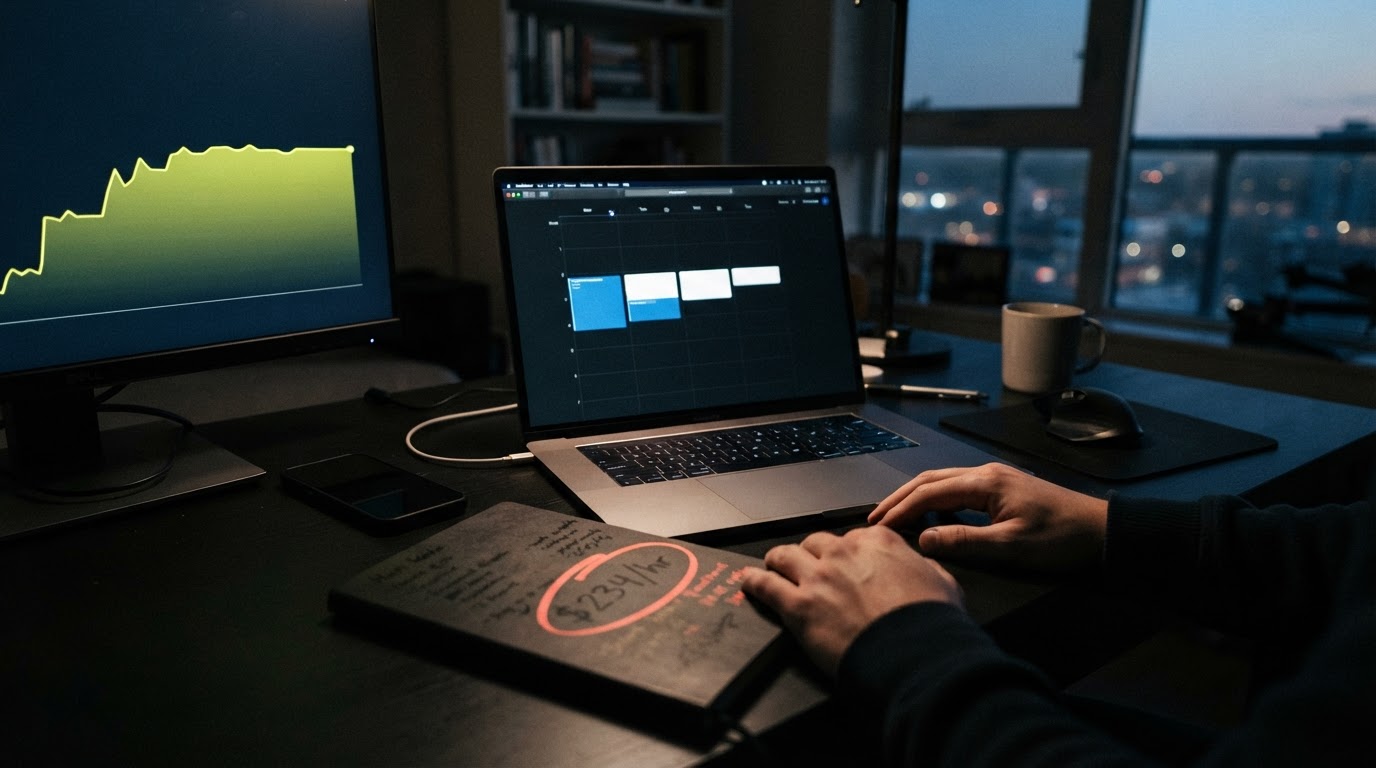
$234 an hour is a good rate. $49,283 a year is not a good year.
Both numbers come from the same study.
The 2025 ICF Global Coaching Study was run with PwC Research on 10,035 valid survey responses, covering more than 10,000 coaches in 127 countries. It found that active coach practitioners charge an average fee of $234 for a one-hour coaching session and carry an average workload of 12.4 active clients and 11.6 hours per week. Average annual revenue from coaching activities: $49,283.
The number that refuses to multiply
Run it yourself. 11.6 hours a week across a full year is about 600 hours. At $234, that's roughly $141,000.
The study reports a third of that.
That gap is the whole story, and it isn't a pricing story. Go the other direction: $49,283 divided by $234 is about 211 paid hours a year. Call it four or five billable sessions a week. (Our arithmetic, not an ICF finding.)
So a coach with 12.4 active clients is not running 12 paid sessions a week. The clients are on biweekly or monthly cadences. Some sessions are in discounted packages. Some are discovery calls that never convert. Some are reschedules, no-shows, pro bono, or the hour spent writing the proposal for the hour that eventually gets booked. The ICF measures hours spent working as a coach — working and billing are not the same activity.
The rate on the sales page describes the best hour of the week. The annual figure describes all of them.
Everyone is planning to fix it the slow way
Here's the part that should worry the desk. 59% of coaches globally expect revenue growth in the next year, and they expect it to come not from raising fees but from increasing clients and sessions.
That is a plan to add hours to a week that is already structurally capped. Nobody in this study is short of rate. They're short of sellable time, and more clients means more calendar, more admin, more unpaid selling — the exact overhead that ate the first gap.
Experience doesn't break it either. Coaches with more than 10 years in practice average $69,721 a year, nearly double newer coaches — ten years of reputation, and the ceiling moves by $20,000. US coaches do better, at an average of $71,719, and they're still inside the same arithmetic.
The only exit is a product that isn't an hour
A one-to-one practice has a hard revenue ceiling set by the number of hours a human being will sell, minus the hours they give away to run the business. Raising the price raises the ceiling. It doesn't remove it.
Removing it requires one of three things: a group program, where one hour is paid for by twelve people; a recorded course, where the hour was produced once and sells repeatedly; or a membership, where revenue stops being a function of sessions delivered this week.
Most of the profession is already halfway there. 93% of coaches offer additional services beyond coaching, such as consulting and counseling — but consulting is another hour, sold the same way, with the same ceiling attached.
The study tells coaches their rate is fine. It also tells them exactly how many hours a year the market is willing to buy from them. Those are two different businesses, and only one of them scales.
Sources
- 2025 ICF Global Coaching Study — Executive Summary — International Coaching Federation / PwC
- How Much Do Coaches Earn? Life, Executive, and Business Coach Income — Symbiosis Coaching
- How Much Does a Life Coach Cost in 2026? Rates and Packages — Psychology.com
- Executive Coaching ROI and Statistics: What the Research Actually Shows (2026) — Leaders Adapt
- ICF Global Coaching Study 2025: What It Means for Coaches Today — Trio Coaching Academy
- 60+ Life Coaching Industry Statistics for 2026 — Paperbell
- The Ultimate List of Life Coaching Statistics (2026 Update) — Luisa Zhou
Editor’s note: Every coach selling a premium hourly rate should see their own P&L in the first two numbers — and understand why the fix isn't a price increase.
Keep reading
One in Five Community Owners Is Deliberately Doing Less. The Live Call Is the First Thing to Go.
Circle's 2026 survey data shows community operators quietly dismantling the live programming they once used to justify recurring pricing.
47% of Full-Time Creators Have Thought About Quitting. They're the Ones Selling You the Dream.
Two separate studies put hard numbers on creator burnout — and the people worst affected are the ones who've been doing it longest.
5,095 Creators Were Asked What They Make. Fewer Than 5% Cleared $100,000.
The largest creator survey CreatorIQ has ever run found most earn under $10,000 a year — and that pay still tracks follower count, not engagement.

Last Year Circle Called Live Events "Your Secret Engagement Hack." This Year One in Five Builders Are Cutting Them Back.
Circle's 2026 Community Trends Report shows the live-first playbook unwinding — and the weekly call is the thing most memberships sell.