A $10 Sale Costs 57 Cents on One Platform and $2.09 on Another. Same Product.
A fee comparison published this week priced the same $10 digital product across 13 platform plans. The gap is almost entirely a fixed charge nobody reads.
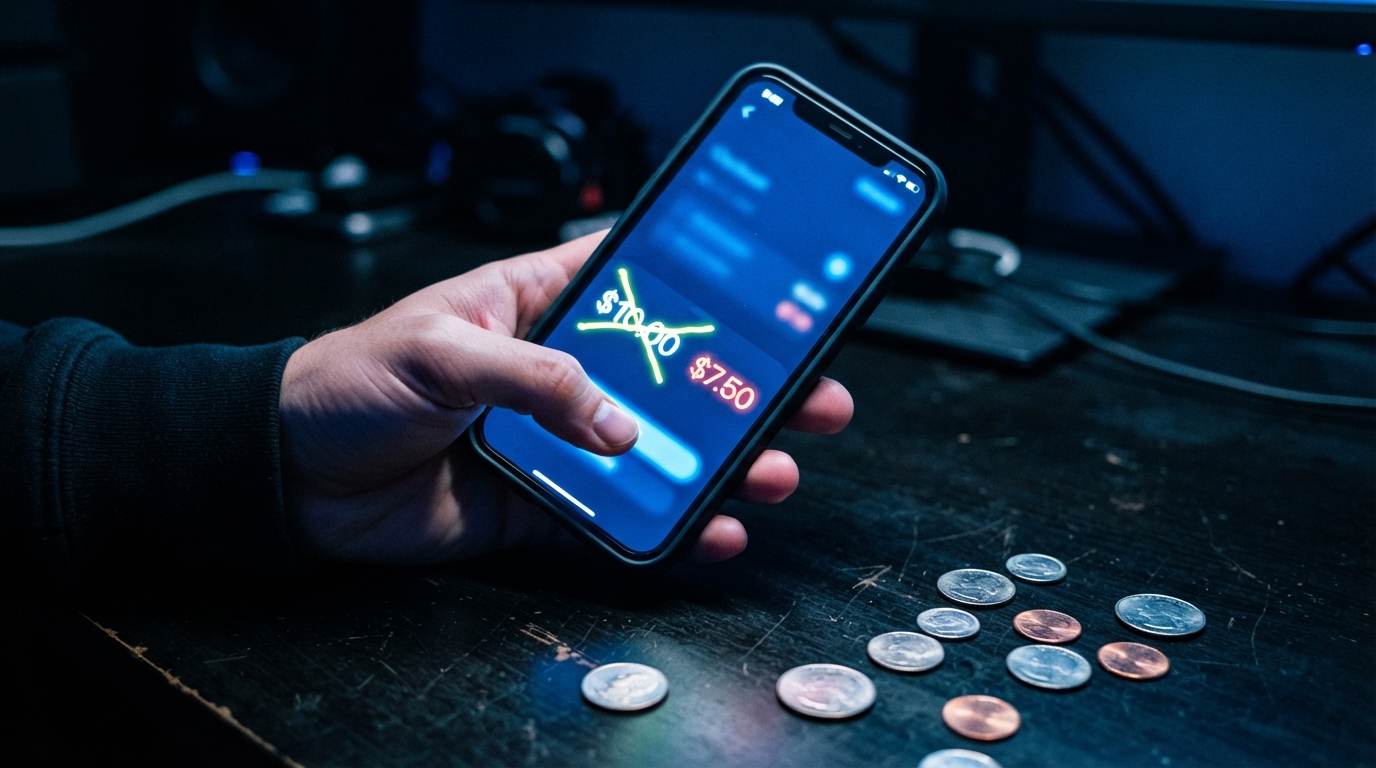
Sell the same $10 template a thousand times and the choice of checkout is worth about $1,520 to you.
That's the uncomfortable arithmetic inside a fee comparison published October 5 by Digital Seller Guide, which compared what creators keep per sale on Whop, Gumroad, Payhip, Stan Store, Skool, Kajabi, Patreon, Paddle and Lemon Squeezy using published rates across 13 plans.
The headline number: a $10 sale costs $0.57 on Whop, about $0.59 on Stan Store, Payhip Pro, Skool Pro and Kajabi, $1.00 on Paddle and Lemon Squeezy, $1.59 on Patreon and $2.09 on Gumroad.
Same file. Same buyer. Same price. A 3.7x difference in what it costs you to collect ten dollars.
The percentage isn't the problem
Every creator comparing platforms stares at the same thing: 3% versus 5% versus 10%. That's the wrong column.
The comparison's own conclusion is that a $0.30 to $0.80 fixed charge is 3% to 8% of a $10 price before any percentage is applied, so sellers of low-priced templates, presets and e-books should compare the fixed fee first.
Run the Gumroad math. On a $10 sale, the $2.09 total means you're handing over 20.9% of the price. The platform's advertised rate is 10%.
Whop's $0.57 works out to 5.7%, against a published 2.7% + $0.30. Even the cheapest option on the board is costing more than double its sticker rate at this price point.
This is why the $9 tripwire and the $7 bonus download behave so badly in a spreadsheet. The cents are a rounding error per sale and a mortgage payment per year.
Go up in price and the problem quietly disappears
At $50, the whole landscape flattens. Sellers keep between $42.75 on Gumroad (10% + $0.50 plus card processing) and $48.35 on Whop (2.7% + $0.30).
That's 14.5% at the expensive end and 3.3% at the cheap end. Still a real gap, but the fixed charge has stopped dominating. Multiply the price by five and the fixed fee's bite shrinks by five.
Which means the platform question is really a price-point question. If everything you sell is under $20, the fixed cents decide your margin. If your core product is $297, you are arguing about something that barely moves.
The expensive ones are selling you a service you may not want
The most costly plans on the list are not simply overpriced. Merchant-of-record platforms — Paddle, Lemon Squeezy and Gumroad — cost two to three percentage points more per sale but take on sales-tax and VAT liability.
So part of the spread is insurance. If you sell to buyers in the EU and have no intention of registering for VAT anywhere, the premium buys you out of a paperwork problem. If you sell almost entirely to US customers, you're paying for coverage you're not using.
The other variable is the monthly plan, and the report's first finding is blunt: monthly plans only pay off at volume. A $0 platform taking a percentage beats a $99 subscription until your revenue crosses the line where the subscription amortises.
"Most creators compare the headline percentage and miss the fixed fee and the monthly plan, which matter more for small products and small sellers," said Karel Moreau, the guide's editor.
Pull last month's payout report. Divide total fees by number of sales. If that number starts with a 1 and your product costs $10, you already know what to do next.
Sources
- Fees on a $10 Digital Product Range From $0.57 to $2.09 Across 13 Platform Plans — EIN Presswire / Digital Seller Guide
- Fees on a $10 Digital Product Range From $0.57 to $2.09 Across 13 Platform Plans — National Law Review (press release)
Editor’s note: Everyone shopping for a course platform compares monthly plans. The money is leaking from a 50-cent line item instead.
Keep reading
A Student Paid Her $97 in 2017. She Was Still Working for That Sale in 2020.
Monica Froese retired four Pinterest courses partly because of two words on her own sales page. Here's the real cost of "lifetime access."
Six Readers Out of 1,000 Will Pay You. That's the Median — and It Doesn't Kill the Business.
beehiiv published the arithmetic most course creators only guess at: 0.62% conversion, $100 a year, and a subscriber who sticks around six to twenty months.
Same Course, Same Price, 2.6x the Payout. It Depends Entirely on Who Sent the Buyer.
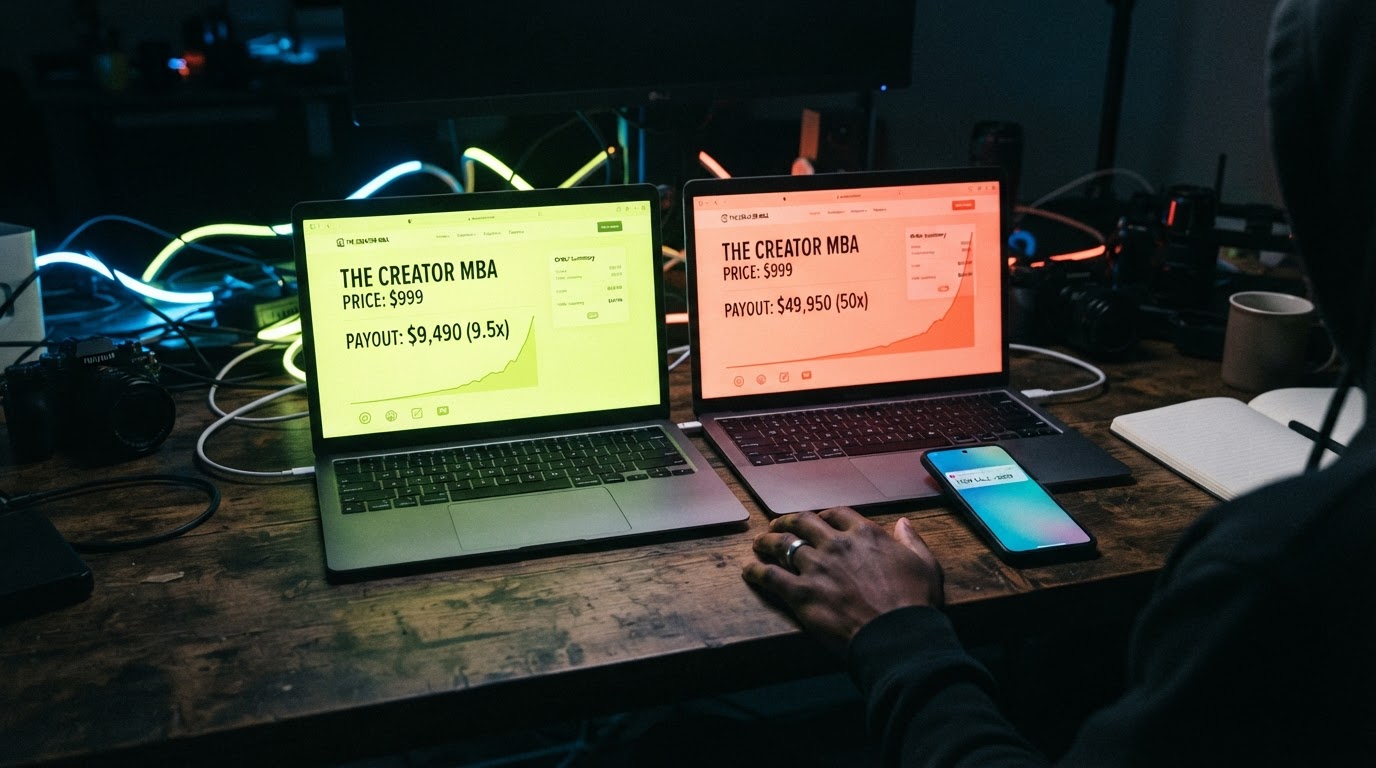
Udemy pays instructors 97% when the student arrives through their link and 37% when the marketplace sends one. That gap is the whole business.
"Business Coaching" Is Now a Flagged Category. Your Payment Processor Just Got the Memo.
An FTC order against processor Nuvei defines coaching programs and auto-renewing subscriptions as higher-risk merchants — and spells out exactly how they get screened.