Chegg Paid $7.5 Million Because Cancelling Was Too Hard. Now Go Look at Your Own Cancel Page.
An ed-tech company just wrote a seven-figure cheque over checkout friction. Most creator memberships are built exactly the same way.
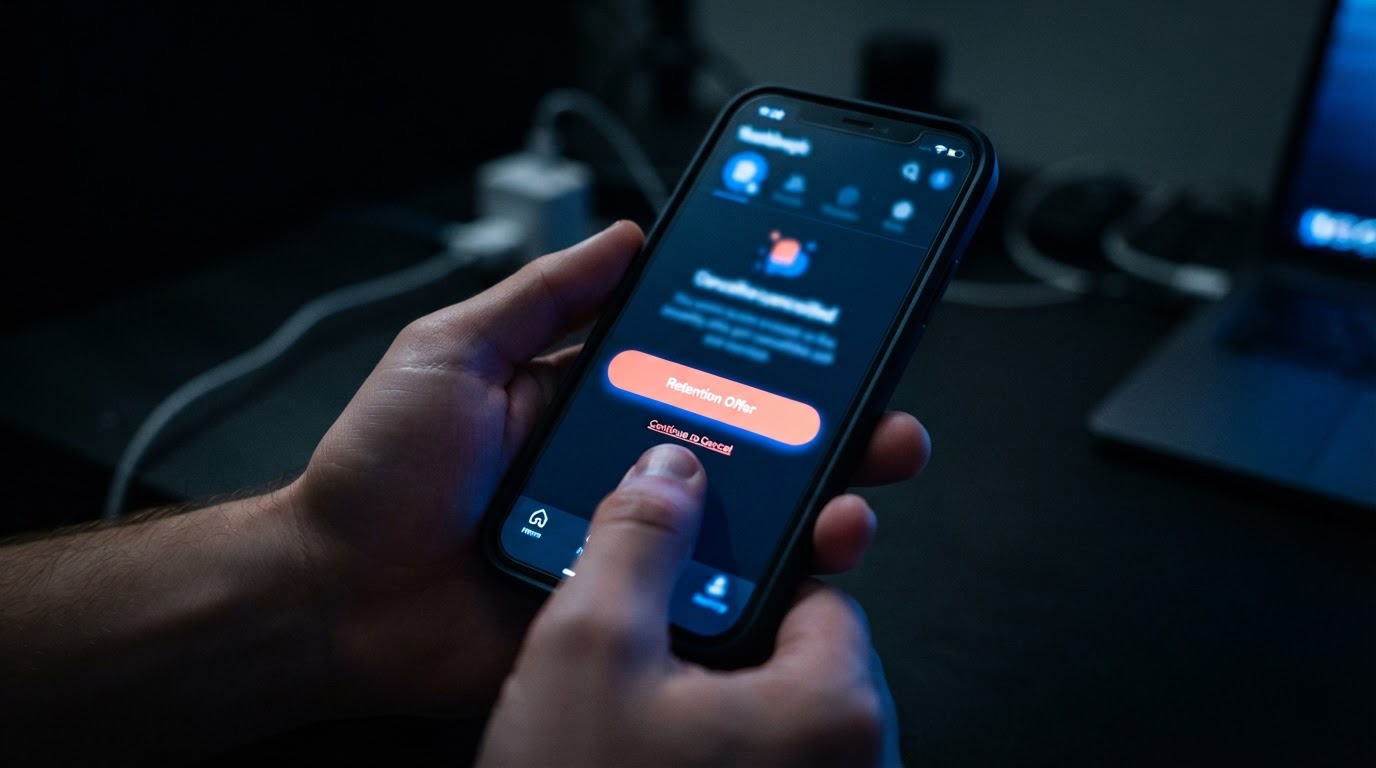
An education company was made to pay $7.5 million because its customers couldn't get out.
In September 2025, the Federal Trade Commission announced that Chegg would be required to pay $7.5 million to settle allegations that the ed-tech provider made it extremely difficult for consumers to cancel recurring subscriptions while also failing to honour cancellation requests. The FTC alleged that parents and students had to click through numerous unintuitive pages to find the cancellation option, then work through another series of confusing steps to finish the job. The agency also alleged Chegg kept charging nearly 200,000 consumers since October 2020 after they had asked to cancel.
Nothing about that description is exotic. It is the default architecture of a creator membership.
The standard is embarrassingly simple
The settlement requires Chegg to pay the $7.5 million in consumer refunds and to provide a cancellation process at least as simple as the enrollment process. For online services, cancellation has to be easy to find and complete; for phone cancellations, a clearly disclosed number during normal business hours, no more burdensome than the method used to sign up.
If your members join with a Stripe checkout and leave by emailing support, you already fail that test.
A lot of creators assumed this stopped mattering. A federal appeals court vacated the FTC's Click-to-Cancel rule on procedural grounds, but the agency still has laws like ROSCA available and can use them against companies that sell subscriptions without an easy way out. Roughly 30 states have their own automatic-renewal laws, some stricter than the vacated federal rule.
"Save-a-sale" is now on the record
The part worth reading twice: the FTC's new rulemaking zeroes in on cancellation flows and "Save-A-Sale" practices, asking for detailed information on enrollment and cancellation times and rates, and on the performance of retention offers.
The agency is asking companies how well their downsell works. Sit with that.
Christopher Mufarrige, director of the FTC's Bureau of Consumer Protection, said negative option subscriptions "continue to be plagued by difficult cancellation processes, unlawful retention tactics" and other impediments. One save offer on the way out is not an enforcement action. Three screens of pleading, a required reply from support and a 48-hour delay is a different animal.
Your buyer is being coached too
The FTC is also training the person on the other side of your funnel. Its consumer alert on business coaching scams tells buyers to treat success stories with suspicion. "Glowing stories of success could be fake or misleading, and positive online reviews may have come from made-up profiles," the agency said. Promises of guaranteed income, large returns for little work, or a "proven system to make money" are flagged as likely scam markers.
That is a description of a fairly ordinary webinar slide deck.
The two-minute audit
Open a private browser window. Log into your own membership as a member, not as the admin.
Can you find the cancel button in under 30 seconds? Does clicking it actually cancel, or does it open a ticket? Does the charge stop the moment they cancel, or at the end of a cycle you never disclosed at checkout? The Chegg order requires charges to stop immediately when a consumer cancels.
Then read your own sales page with the FTC's coaching alert open in the next tab.
The cheapest version of this audit costs you an afternoon and a slightly worse churn number. The expensive version has a docket number.
Sources
- Ed Tech Provider Chegg to Pay $7.5 Million to Settle FTC Allegations Concerning Unlawful Cancellation Practices — Federal Trade Commission
- Chegg, Inc. (case page) — Federal Trade Commission
- Does your business offer subscription services? Learn about the FTC's settlement with Chegg — Federal Trade Commission
- FTC Seeks Public Comment in Response to Advance Notice of Proposed Rulemaking Regarding Negative Option Marketing Practices — Federal Trade Commission
- FTC Revives Negative Option Rulemaking — Troutman Pepper Locke / Regulatory Oversight
- Even Without Click-to-Cancel, the FTC Forces $7.5M Settlement Based on Subscription Violations — Fisher Phillips
- FTC orders Chegg to pay $7.5 million over subscription cancellation practices — HLC
- FTC Lessons Learned: Chegg's $7.5 Million ROSCA Settlement — Davis+Gilbert LLP
- FTC Revives Click-to-Cancel Rule: New Risks for Subscription Businesses — Jones Day
- How to spot and avoid business coaching scams — FTC Consumer Advice
- Business Coaching or Business Scam? FTC Shares Red Flags — ACA International
Editor’s note: A real enforcement number attached to the exact cancel flow most creator memberships ship by default, plus a regulator now teaching buyers to read testimonials sceptically.
Keep reading
A Student Paid Her $97 in 2017. She Was Still Working for That Sale in 2020.
Monica Froese retired four Pinterest courses partly because of two words on her own sales page. Here's the real cost of "lifetime access."

Six Readers Out of 1,000 Will Pay You. That's the Median — and It Doesn't Kill the Business.
beehiiv published the arithmetic most course creators only guess at: 0.62% conversion, $100 a year, and a subscriber who sticks around six to twenty months.

Same Course, Same Price, 2.6x the Payout. It Depends Entirely on Who Sent the Buyer.
Udemy pays instructors 97% when the student arrives through their link and 37% when the marketplace sends one. That gap is the whole business.

"Business Coaching" Is Now a Flagged Category. Your Payment Processor Just Got the Memo.
An FTC order against processor Nuvei defines coaching programs and auto-renewing subscriptions as higher-risk merchants — and spells out exactly how they get screened.