There's a Toggle in YouTube Studio Most Course Creators Never Touch. Ignoring It Can Cost You the Partner Program.
YouTube's AI disclosure checkbox takes two seconds. Skipping it when you shouldn't can end in a forced label, removal, or suspension.
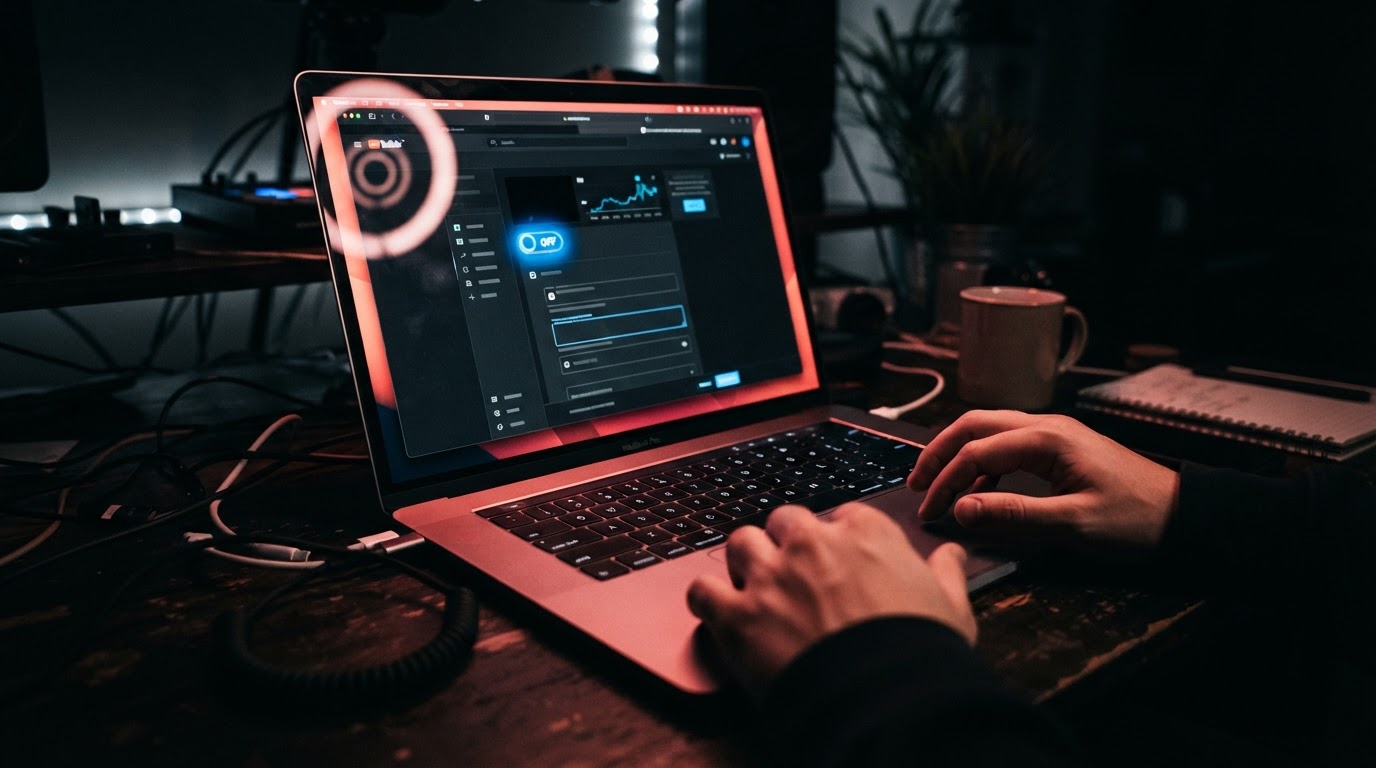
If you don't answer YouTube's AI question at upload, YouTube can answer it for you — and you won't be able to undo it.
That's the quiet part of a policy most knowledge sellers have never read. Google's own help documentation is blunt about the escalation: creators who consistently choose not to disclose may be subject to manual application of a label, or penalties from YouTube, including removal of content or suspension from the YouTube Partner Program.
The reason it matters now is that the top-of-funnel video feeding a lot of course launches has quietly become synthetic. AI scripts. AI voices. AI faces. Most creators assume that puts them in violation. Most of them are wrong — but not all of them.
The rule is narrower than the panic
Using AI to help make a video is not the trigger. YouTube's disclosure guidance lists production assistance such as generating an outline, script, thumbnail, title, infographic, captions, or idea as examples that generally do not require disclosure by themselves.
The trigger is realism. YouTube's options at upload ask creators to indicate that content contains realistic altered or synthetic material — for example, an AI-generated video that realistically depicts an event that never happened, or content showing someone saying or doing something they didn't actually do.
So: an AI-written script read by you, on camera, is not a disclosure event. A photorealistic avatar of you delivering a webinar you never filmed is. A cloned voice narrating a testimonial is. Synthetic footage staged to look like a real classroom, a real event, a real student is.
There's a sharper edge for anyone teaching money, health or law. YouTube's clarification identifies health, legal, finance, and politics as examples of sensitive areas in which a channel can lose monetization if an AI character presents itself as a human expert. A synthetic "coach" fronting a finance funnel is exactly the shape of thing being described.
The toggle is free. The fear isn't.
Here's the detail that should end the internal debate: YouTube says that disclosing altered or synthetic content does not by itself limit the audience or remove monetization eligibility.
There is also a repair path, with limits. If YouTube's systems make an error, creators can change AI disclosure in most cases by selecting No in the AI disclosure survey under "Attributes" in YouTube Studio, and the Studio notification stays until the survey is updated — but content made with YouTube's AI tools, content containing C2PA metadata, or content labeled after manual review cannot be adjusted.
Translation for anyone running a launch channel: a label you apply is reversible. A label YouTube applies after review is not.
Eleven changes, and you read none of them
A dated timeline published this month by AIR Media-Tech makes the case that nobody is keeping up. YouTube confirmed more monetization changes in the past eighteen months than in the previous five years combined. AIR counts eleven separate, dated adjustments across YouTube's advertiser-friendly content guidelines and policy changelog governing what qualifies for full ads — more specific and more frequent than most creators realize.
The pressure behind it is commercial. Advertisers grew wary of appearing next to AI-generated slop, pushing YouTube toward that run of ad-sustainability changes. And enforcement got wider: mass-produced AI content flooding the platform through 2025 pushed the inauthentic content policy to a channel-level detection system instead of a video-by-video one.
Channel-level is the word that should worry a course business. One sloppy upload stops being one sloppy upload.
The clock underneath all of it
The timeline lands on a bigger date. The full Partner Program rewrite — the first since 2018 — was announced August 10, 2026 and takes effect February 1, 2027. New applicants will then need 8,000 qualified watch hours in the previous 365 days or 20 million qualified Shorts views in the previous 90 days, and the change doesn't affect creators already in the program.
Which reframes the risk. For most course sellers, YouTube ad revenue is the least valuable thing the channel produces — the channel exists to fill a funnel. The penalty that actually hurts isn't a lost RPM. It's a removed video, a label you can't take off the asset doing your selling, and a re-entry bar that doubles in February.
Check the last thirty uploads against the question. It takes longer to argue about than to answer.
Sources
- Disclosing use of altered or synthetic content — YouTube Help (Google)
- Our approach to responsible AI innovation — YouTube Official Blog
- YouTube Monetization Policy Changes 2026: Full Dated Timeline — AIR Media-Tech
- Upcoming and recent ad guideline updates — YouTube Help (Google)
- YouTube updates channel monetisation rules after 8 years: What's changing — Business Standard
- YouTube Monetization Rules in 2026: How to Avoid AI Slop — Quasa
Editor’s note: A two-second checkbox with a stated Partner Program penalty attached — and most creators have the rule backwards in both directions.
Keep reading
The Company That Makes Claude Now Teaches 22 Free Courses. It's Adding More Every Month.
Anthropic nearly doubled its Coursera catalog in one day, moving past developers into small business, creative work and K-12 classrooms.
Your Biggest Free Competitor Just Got Rated "Unacceptable Risk"
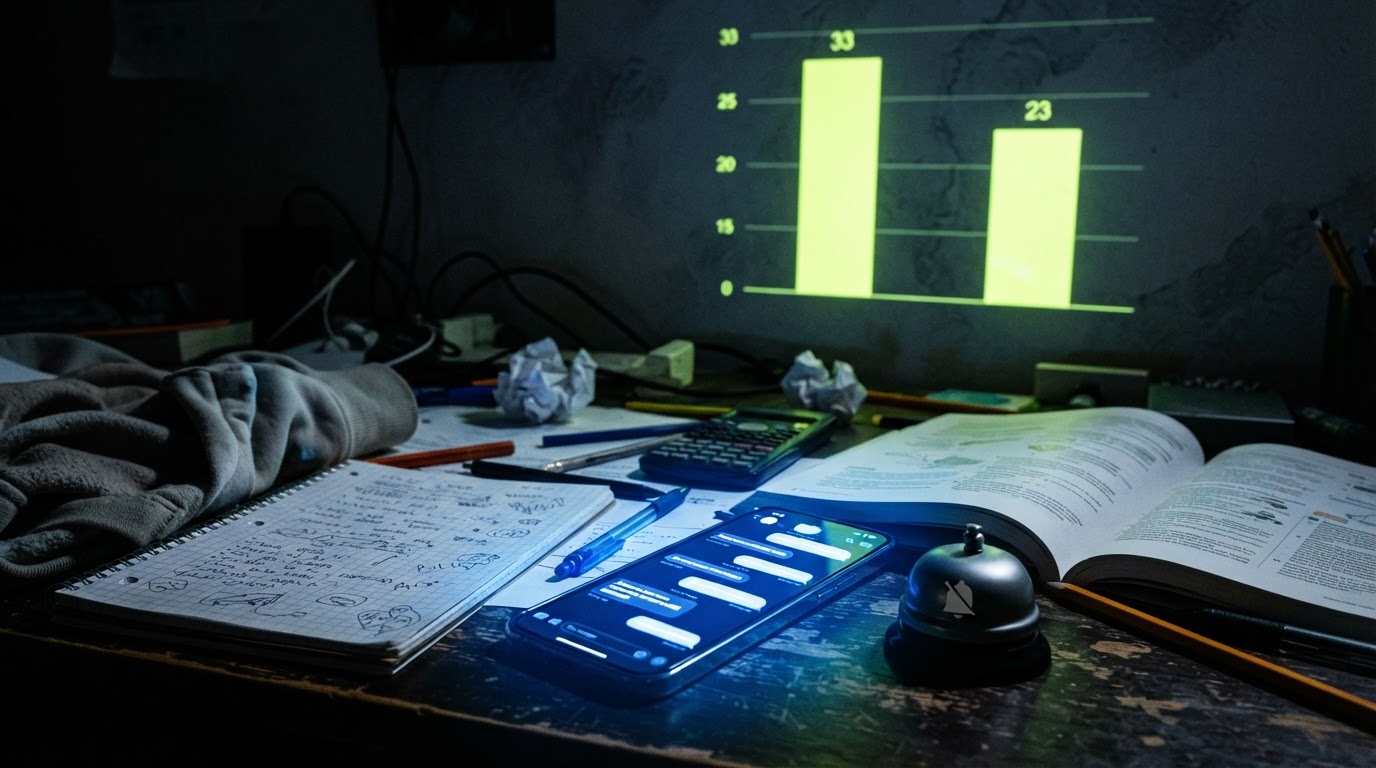
An independent lab ran 4,000+ prompts through teen ChatGPT accounts. Crisis hotline referrals fell from 33% to 23% after OpenAI's teen launch.
The Newest Ad Platform on Earth Wants $300,000 Before It Will Talk to You
OpenAI's image ads go live inside ChatGPT this week at a reported $40 CPM and a $300,000 minimum. The useful part is buried underneath.
ChatGPT Stopped Answering in Plain Text. Now It Builds the Calculator and the Diagram Itself.
OpenAI shipped interactive answers to every ChatGPT tier last week. The thing course platforms charge creators extra to build just became a free default.